

You've found your dissertation hood, confirmed the ceremony date, and opened a product page that looks close enough. Then you notice the gown is black, the hood trim uses a generic doctorate color, or the cap shown is a mortarboard instead of the style USC expects. That's how a seemingly simple purchase becomes a ceremony-day problem.
USC doctoral regalia requires more than selecting a doctoral size. USC's cardinal gown, gold detailing, royal blue doctorate color, and cardinal-and-gold hood lining create a university-specific ensemble. This guide gives you a practical way to verify each component, measure correctly, coordinate a group order, and protect your timeline before checkout. For broader comparisons among university-specific doctoral garments, see this overview of doctoral regalia by university.
Table of Contents
- What Makes USC Doctoral Regalia Different
- USC Doctoral Gown Hood and Tam Specifications Explained
- How to Order USC Doctoral Regalia for Individuals and Groups
- Sizing Fabric and Swatch Guidance for a Perfect Fit
- Shipping Deadlines Returns and Ceremony Logistics
- Final Checklist Before You Buy USC Doctoral Regalia
What Makes USC Doctoral Regalia Different
A doctoral candidate can follow standard academic-dress conventions and still order the wrong USC outfit. The first checkpoint is color. USC's official doctoral gown is cardinal, not the standard black gown used by many general regalia systems. That difference should guide your product search from the first result, not serve as a correction after checkout.
USC's cardinal-and-gold doctoral gown was proposed for the university's centennial in 1980 and first worn at President James H. Zumberge's inauguration in May 1981. The design was revised for President Steven B. Sample's 1991 inauguration with red velvet panels framed by bright gold braids. USC documents this history in its official caps, gowns, and regalia guidance. The history matters because the gown is an institutional design, not a generic doctoral rental.
Before ordering, confirm four visible details: a cardinal gown body, the appropriate gold and velvet treatment, royal blue doctorate coding, and a cap that matches USC's requirement. Compare those details with broader references such as doctoral regalia by university, then rely on USC's own specifications for the final decision.
Why the hood causes the most errors
The hood identifies degree level, academic discipline, and conferring institution. A vendor can provide the correct doctoral length while using the wrong lining, or supply USC colors with a velvet edge assigned to another discipline.
USC's hood must coordinate several visual rules. The lining carries USC's cardinal and gold colors. The velvet band identifies the academic discipline, while the doctorate color is royal blue. Check each feature in the product description and photographs. A hood that looks correct from the front can still show the wrong lining during hooding or stage photographs.
Coordinator's rule: Treat the USC gown and hood as one matched system. Do not combine pieces from separate specifications until every color, trim, attachment, and degree detail has been checked.
The practical buying mindset
Start with USC's written guidance, not a marketplace search result. Confirm whether your school or department specifies the gown construction, hood attachment, and cap style. Then compare the listing line by line before entering payment information.
For an individual order, save the product details and verify each option before checkout. For a department order, prepare one specification sheet and send it to every candidate. That process prevents one graduate from receiving a standard black set while the rest receive USC-specific cardinal regalia.
The correct order is a USC doctoral ensemble with a cardinal gown, appropriate gold and velvet detailing, royal blue doctorate coding, USC hood lining, correct discipline trim, and the required cap style.
USC Doctoral Gown Hood and Tam Specifications Explained
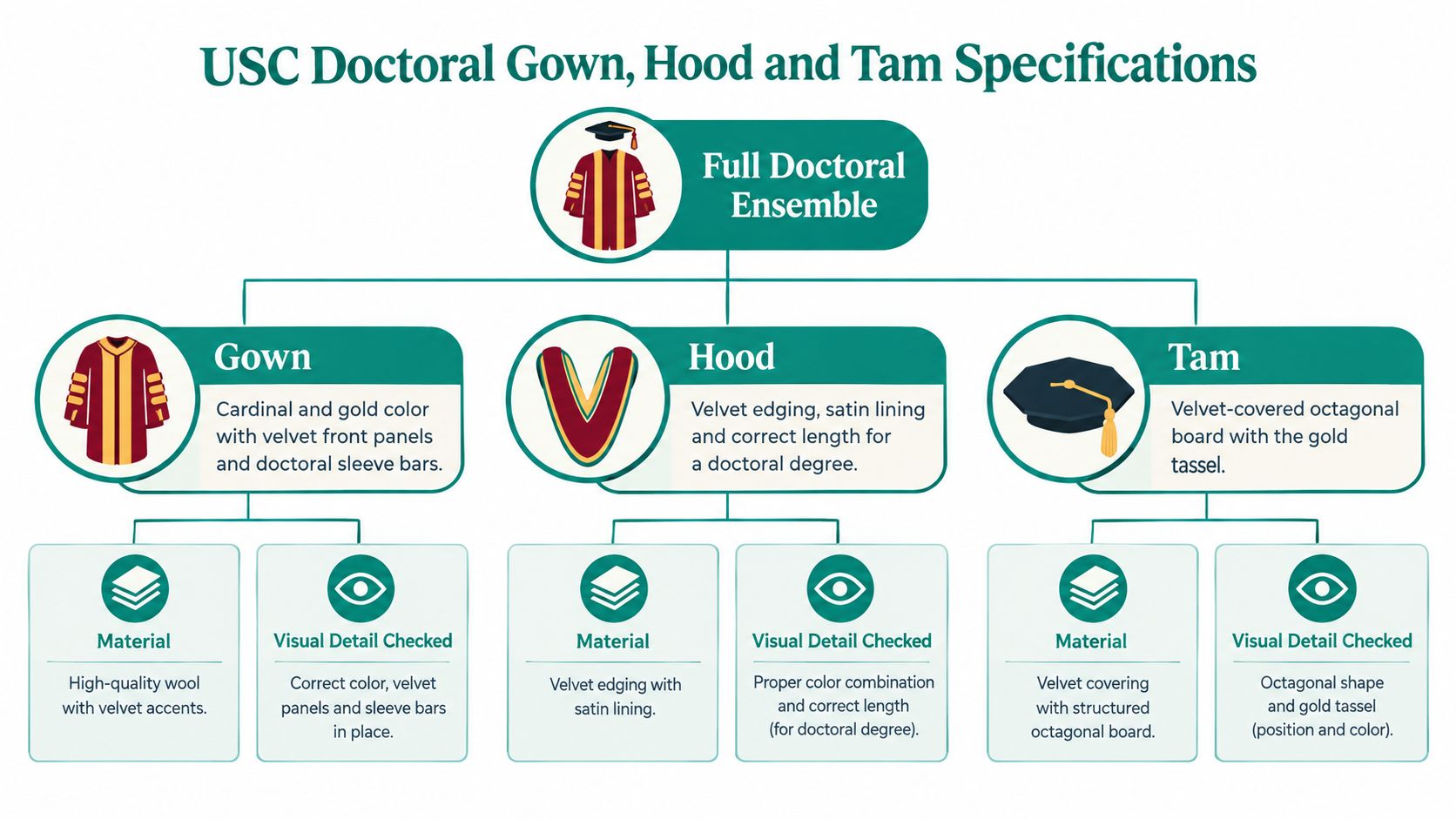
Before checkout, compare the gown, hood, and tam as one coordinated USC doctoral set. Each piece communicates different information, and a correct order requires all three to match the university's colors, degree level, and academic discipline.
The gown
Order a cardinal doctoral gown, not a generic black doctoral shell. USC's documented design history describes cardinal-and-gold doctoral gowns, followed by red velvet panels framed with bright gold braids. Product photos and descriptions should clearly show the cardinal body, velvet front panels, and gold braid treatment.
The sleeves provide another checkpoint. Doctoral gowns use distinctive sleeve bars and should look structurally different from bachelor's or master's robes. A listing that says only “doctoral gown” is insufficient if its photos show a plain black body or leave out the USC-specific panel details.
| Component | What to verify | Why it matters |
|---|---|---|
| Gown body | Cardinal color | Distinguishes USC doctoral dress from standard black regalia |
| Front detail | Red velvet panels with bright gold braid framing | Reflects USC's documented doctoral design |
| Sleeves | Doctoral sleeve bars | Confirms the degree-level construction |
| Overall set | Gown, hood, and cap or tam match | Prevents mixed institutional and generic specifications |
The hood
The hood requires the closest inspection. Doctoral hoods are generally 4 feet long with 5-inch velvet trim. The shell is generally black, while the lining displays institutional colors, as described in this guide to U.S. doctoral regalia specifications. USC guidance identifies royal blue as the doctorate's academic color and specifies USC's cardinal and gold colors for the hood lining.
Verify these three details in the listing:
- Length: Select a doctoral hood, not a master's or bachelor's hood.
- Lining: The visible satin must show USC's cardinal and gold.
- Velvet band: Confirm the discipline trim and the use of royal blue for the doctorate under USC's academic color guidance.
Product selectors can use different color systems. The code-based model treats the PhD as dark blue regardless of field, while campus instructions may use different terminology. If your department's written requirements conflict with a generic selector, pause the order and confirm the specification with the department or regalia provider.
A product such as Doctoral Gown for MIT University Graduation shows why every description needs careful reading. The Grad Store listing describes an MIT item with a black shell, bridal satin lining with chevron accents, 5-inch velvet degree-color accents, a traditional 43-inch length, professional construction, and an attachment loop. Those details apply to that catalog item, not to USC. For a USC order, the cardinal gown and cardinal-and-gold lining remain the controlling requirements.
The tam
USC doctoral candidates may need a velvet tam instead of a standard mortarboard, depending on school instructions and the selected ensemble. USC identifies royal blue as the doctorate's academic color, while the hood lining carries the university colors. Check the cap separately. Do not infer its specifications from the hood.
Confirm the tam's shape, material, size range, and tassel before paying. Doctoral tams may use four-, six-, or eight-sided construction, and the university or department may specify one required form. If a mortarboard is permitted or supplied, confirm that option directly. A cap substitution can make an otherwise correct gown appear mismatched at check-in.
How to Order USC Doctoral Regalia for Individuals and Groups
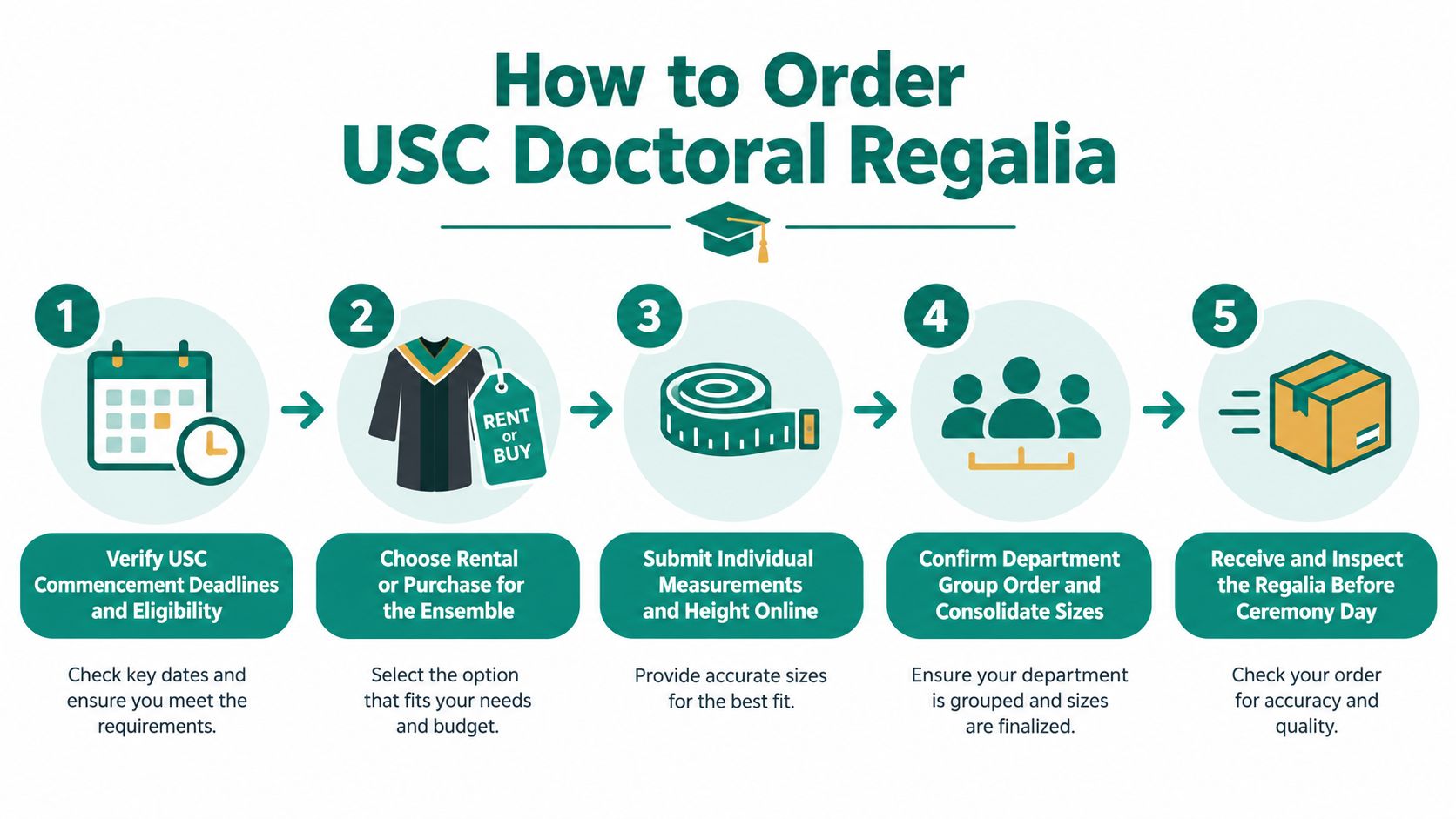
Your ceremony date is approaching, and the order form offers several gown colors, hood options, and cap styles. Start with USC's written requirements, not a generic “PhD regalia” search. USC's cardinal gown history and color rules make a mismatched hood or standard black gown an avoidable checkout mistake.
Confirm eligibility and ceremony instructions
Check your USC school or department commencement page first. Confirm ceremony eligibility, whether doctoral candidates are hooded during the ceremony, and the stated deadline for home shipping or campus pickup. Instructions may be split across university, school, and department pages, so review each source that applies to your program.
Save the relevant wording or download the instructions. If USC separates doctoral, master's, and professional degrees, select the exact category assigned to your program. That category should control the gown, hood, and any ceremony-specific preparation.
Choose rental or purchase with the ceremony sequence in mind
Rental fits candidates who need regalia for one ceremony and can return it immediately afterward. Purchase fits candidates who want to keep the ensemble, need a custom specification, or want time to inspect and prepare each piece.
Price should not decide the order by itself. Confirm the return deadline for a rental, and verify return and exchange terms before buying personalized or custom-made components. Check the color and measurements before payment, especially when a replacement would arrive close to commencement.
Use Grad Store's university regalia finder to locate an institution-specific collection, then compare every listed option with USC's requirements. The finder helps locate products. It does not replace USC's instructions.
Submit measurements carefully
Prepare your total height, shoulder width, chest circumference, and head circumference before opening the order form. Measure head circumference about 1 inch above the ears and shoulder width from shoulder tip to shoulder tip across the back, following this doctoral regalia sizing guidance.
Have someone take the shoulder and chest measurements. Enter each value in the unit requested, and use clothing size only when the form specifically requests it. The gown, hood, and tam are separate pieces, so a correct gown selection does not confirm the tam size.
Departments should consolidate before checkout
A department ordering for a cohort should appoint one coordinator to own the specification. Collect each candidate's name, degree, discipline, height, shoulder width, chest, head circumference, rental or purchase choice, and required customization.
Review the complete file before placing the group order. Look for missing measurements, inconsistent discipline colors, and candidates who selected a standard black gown instead of the required cardinal ensemble. One consolidated order also gives the department a clear way to manage delivery and distribute garments for inspection.
Inspect the package, not just the confirmation
When the box arrives, compare every garment with the order and USC's instructions. Confirm the cardinal gown, gold braid and velvet panels, doctoral sleeves, hood lining, velvet trim, and tam or mortarboard. Try on the complete ensemble with the clothing and shoes planned for commencement.
If anything is wrong, photograph it, keep the packaging, and contact the provider with the order details and the applicable USC requirement. Requesting a replacement before ceremony day gives the provider time to correct the issue.
Sizing Fabric and Swatch Guidance for a Perfect Fit
A doctoral candidate can receive the correct USC cardinal design and still struggle with sleeves, collar, or tam fit. Order by measurement, then verify the fabric and color before checkout. The gown, hood, and tam are separate pieces, so a correct gown size does not determine the tam.

Measure total height without shoes. Measure shoulder width across the back from shoulder tip to shoulder tip, chest circumference around the fullest part of the chest while standing naturally, and head circumference about 1 inch above the ears. These measurements help prevent short sleeves, a tight collar, and a tam that sits incorrectly.
Keep the tape comfortably against the body. Academic gowns need room for the clothing worn underneath, while a compressed measurement can produce restrictive shoulders or sleeves. Have someone take the shoulder and chest measurements, record every value in the provider's requested unit, and repeat any measurement that looks inconsistent. Use clothing size only when the order form specifically requests it.
Fit check: Try on the gown with the shoes and clothing planned for commencement. Sleeve placement and length can look fine over a thin shirt but feel restrictive over formal clothing.
Fabric changes the appearance
Fabric finish affects how USC cardinal photographs and how the gown hangs. A matte surface absorbs more light and looks quieter. A shinier finish reflects venue lighting and can make folds more visible. Select a material that matches the product description and USC's color and design requirements.
Request a fabric swatch for a custom order whenever the provider offers one. Screens can display cardinal, red, and burgundy differently across devices. A physical swatch gives you a more reliable way to compare the body color, velvet contrast, and hood lining before production.
Use the provider's size, color, and fabric guide to review measurements and material details before submitting a custom request. If your height or proportions fall between listed sizes, ask whether the gown is cut by height, chest, shoulder measurement, or a combination.
The video below shows how to take garment measurements before ordering.
Validate the tam independently
Head measurement determines tam selection, so do not assume it follows the gown size. A candidate may need a larger gown and a smaller tam, or the reverse. Measure the head in the same position each time, then check whether the provider lists the tam by circumference, fitted size, or a general size range.
For a department order, give every candidate the same measuring instructions. Keep a shared sheet containing each candidate's name, height, shoulder width, chest, head circumference, degree, discipline, and requested customization. Review it for missing values and inconsistent color selections before checkout. Limit access to the personal measurements required for fulfillment.
Before submitting the order, inspect the listed fabric edge, hood attachment loop, lining, and tam construction. These details affect hooding, photographs, and comfort throughout the ceremony.
Shipping Deadlines Returns and Ceremony Logistics
A correct USC doctoral gown can still fail on ceremony day if it arrives late, includes the wrong component, or cannot be corrected before you leave for campus. Set the delivery deadline around inspection and fitting, not the ceremony date.
Choose shipping around your correction window
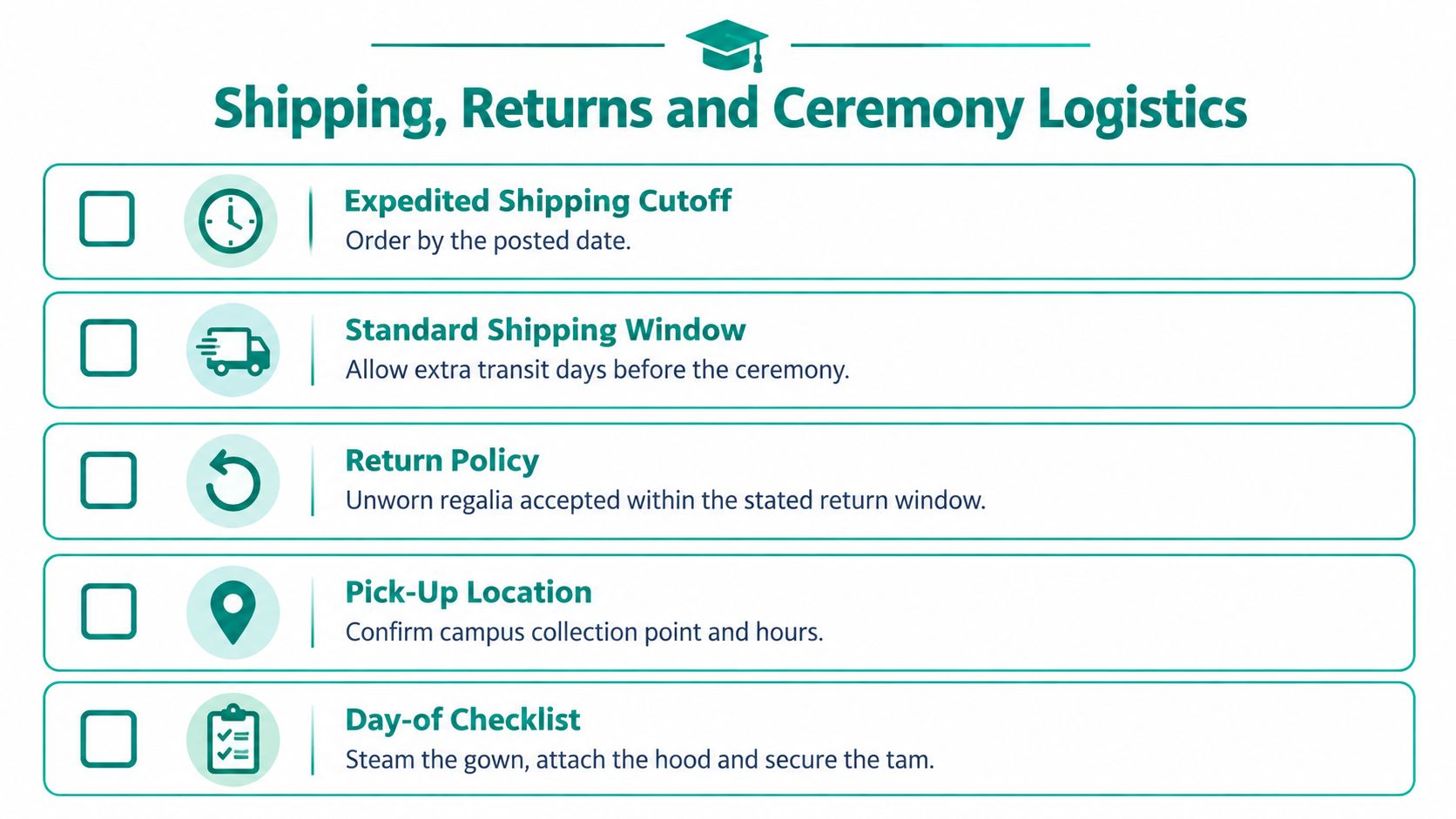
Standard shipping is suitable only when the provider's cutoff leaves time for transit, delivery, fitting, and a possible replacement. Open the package as soon as it arrives. Check the cardinal gown, red velvet panels, gold braid, royal blue hood trim, lining, tam, and included accessories before the ceremony week.
Expedited or overnight shipping helps when the schedule is compressed, but it does not shorten production for a custom garment. Confirm inventory, customization timing, and the provider's order cutoff before paying. A fast carrier can deliver a completed order quickly. It cannot make an unfinished gown available immediately.
Home delivery gives you privacy for inspection and fitting. Campus pickup may suit local candidates, but confirm the pickup location, hours, identification requirements, and whether the full order is included. Ask who handles a missing hood, damaged velvet, or incorrect color.
Rental and purchase create different responsibilities
| Situation | Best operational choice | What to confirm |
|---|---|---|
| You need the ensemble only for the ceremony | Rental | Return location and immediate post-ceremony deadline |
| You want to retain the regalia | Purchase | Return exclusions, exchange terms, and customization rules |
| You're ordering close to the ceremony | In-stock or expedited option | Actual fulfillment timing before payment |
| You're coordinating a cohort | Group order | Consolidated measurements and one delivery plan |
USC school FAQs state that rented gowns and hoods should be returned immediately after the ceremony, while caps and tassels may be kept. Follow the instructions for your specific USC school. The return bin or drop-off process may be separate from ordinary online returns.
For a purchase, save the order confirmation, customization details, and return policy. Custom USC cardinal colors or degree-specific hood work may have different exchange rules from standard stock items. Resolve those terms before checkout, not after the package arrives.
Rehearse the hooding process
USC doctoral students are commonly hooded during the ceremony, and USC guidance says to carry the hood on the left arm until hooding. Keep the loop accessible and prevent the lining from twisting inside a garment bag.
The chair generally performs the hooding. USC school FAQs state that another chair, dean, or vice dean can substitute if the chair is absent. Ask your department who is authorized and confirm the sequence during rehearsal or the candidate briefing.
Ceremony rule: Carry the hood on your left arm, keep the loop accessible, and confirm who will perform the hooding before the procession begins.
On ceremony day, steam the gown according to its fabric instructions. Attach the hood before leaving if your school directs you to do so, and secure the tam so it stays in place while you walk. Keep the ensemble on a hanger, avoid sharp folds across velvet panels, and pack the hood where it will not be crushed.
Final Checklist Before You Buy USC Doctoral Regalia
You are at checkout, and the product page shows several red gowns, hood options, and cap styles. Stop before paying. Verify each detail against USC's cardinal gown history and your school's written requirements.
- Gown color: Confirm that the product is a USC cardinal doctoral gown, not a generic black gown.
- Gown construction: Check for the red velvet panels, bright gold braid framing, and doctoral sleeve bars.
- Doctorate color: Confirm that the listing identifies royal blue for the doctorate.
- Hood lining: Verify that the lining displays USC's cardinal and gold colors.
- Velvet trim: Match the band to your academic discipline and the written USC guidance.
- Doctoral length: Confirm that the hood is doctoral length, generally 4 feet, rather than a master's or bachelor's hood. The U.S. doctoral regalia guide explains the level comparison.
- Cap choice: Confirm whether your school requires a tam, permits a mortarboard, or specifies another doctoral cap.
- Measurements: Record height, shoulder width, chest circumference, and head circumference according to the provider's instructions.
- Fabric: Request a swatch or ask a support representative to confirm color and finish for a custom order.
- Timeline: Leave enough time for delivery, fitting, inspection, and any correction.
- Return plan: Know where and when a rental must be returned, and save the purchase confirmation and customization details.
- Hooding plan: Confirm who will hood you and how you will carry the hood before the ceremony.
A clear answer for every item means the order is ready. Any uncertainty about cardinal color, royal-blue doctorate identification, hood lining, velvet trim, or cap style belongs with the provider or your USC department before checkout.
For a group order, have the department coordinator approve one sample or specification sheet before collecting payment from the cohort. For an individual order, send support the USC requirement and request written confirmation of the gown color, hood lining, velvet trim, cap style, and fulfillment timeline.
Grad Store offers university-focused doctoral regalia, custom gown and hood options, sizing and fabric guidance, swatch requests, group-order coordination, and shipping choices for commencement timelines. Visit Grad Store to compare USC doctoral regalia options and confirm the details before placing your order.