

You've opened the MIT Commencement packet, found the ordering instructions, and then noticed that the gown pictured by one supplier doesn't look like the one in MIT's materials. The uncertainty is understandable. MIT regalia isn't one generic cap-and-gown product, and a doctoral set, master's set, and bachelor's set follow different construction and color rules.
The safest approach is to work backward from the ceremony. Confirm your degree level, compare the gown and hood with MIT's published specifications, decide whether you'll use MIT-issued regalia or a vendor-supplied set that conforms to those specifications, and allow enough time for fitting and approval. A department or cohort order can simplify the process further by putting one person in charge of sizes, colors, delivery, and distribution.
Table of Contents
- What You'll Walk Away Knowing About MIT Regalia
- Understanding MIT Regalia and Why It Differs From Generic Sets
- Bachelor's, Master's, and Doctoral Regalia at a Glance
- Official Colors, Hoods, and Velvet Trim Specifications
- Confirming Fit, Fabric, and Color Before You Order
- Ordering Timelines and Expedited Shipping Options
- Coordinating Group Orders for Departments and Cohorts
- Common Ordering Mistakes and Your Final Checklist
What You'll Walk Away Knowing About MIT Regalia
Suppose a shipment arrives shortly before commencement and the gown looks close to the photograph, but the hood or trim does not match. This guide gives you a way to check the set before that problem reaches ceremony morning.
You'll learn to confirm the correct degree-level set against MIT's published requirements. Bachelor's, master's, and doctoral regalia are separate designs, with differences in gown construction, sleeves, hoods, velvet trim, and headwear. Identifying the degree level first prevents a plausible-looking set from being ordered by mistake.
You'll also learn how to choose between MIT-issued regalia and a vendor-supplied set. Borrowing or ordering elsewhere can work when the set matches MIT's official styles. Use the published MIT Regalia guidance as a checklist for those details, rather than judging by color or a product photograph alone.
The ordering workflow follows naturally: identify the degree, compare the specifications, choose the supply route, and order early enough to inspect the shipment. That time allows you to test the fit and address a mismatch before commencement. Doctoral candidates should allow particular care for institution-specific panels, sleeve bars, tams, and hood details.
A group order can reduce duplicated orders and inconsistent colors. A department, lab, or cohort coordinator can collect sizes, confirm each graduate's degree level, and check that the delivered sets follow the same specification.
Practical rule: Treat MIT regalia as a specification to verify, not a costume to approximate.
Academic regalia also has a long institutional history. The modern American system was formally standardized through the Intercollegiate Code of 1895, drawing on medieval European university dress from the 12th and 13th centuries (historical overview of academic costume). MIT's requirements belong to that broader tradition, while the outcome still depends on the precise details of the set you wear.
Understanding MIT Regalia and Why It Differs From Generic Sets
A doctoral candidate arrives at gown pickup with a silver-gray robe that looks close to MIT's. The color seems right, yet the front panel, sleeve bars, tam, or hood may follow another university's pattern. That is why MIT regalia should be treated as a specification to verify, not a costume to approximate.
MIT's doctoral design is especially distinctive. The gown is silver-gray, with a cardinal red faille front panel outlined in silver-gray piping. The headwear is an eight-sided silver-gray tam with a cardinal red tassel. The hood combines a field color, degree-specific velvet trim, and MIT's cardinal red and silver-gray lining. MIT specifies a four-foot doctoral hood, with blue velvet trim for PhD degrees and yellow velvet trim for ScD degrees, as described in MIT's history and symbolism of regalia.
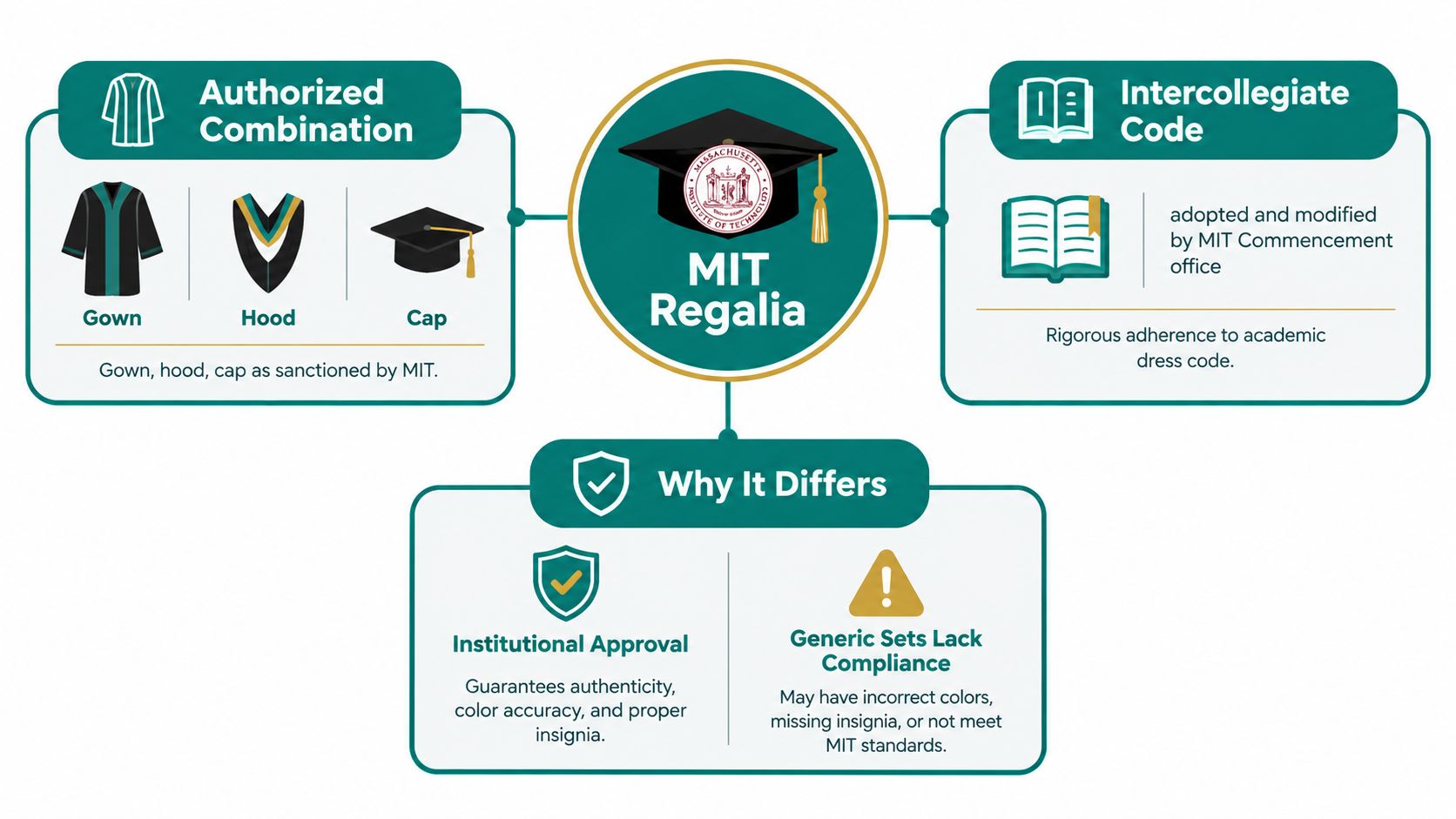
MIT-issued and vendor-supplied sets
An MIT-issued set comes through the institution's designated ordering route. A vendor-supplied set can also work when its cut, trim, color, and hood construction match MIT's requirements. The same check applies to borrowed, rented, and purchased regalia. A doctoral gown from another university is not automatically suitable because it has velvet bars.
The gown itself helps identify the academic level. Bachelor's regalia uses pointed sleeves and is worn closed. Master's regalia also has pointed sleeves and may be worn open or closed. Doctoral regalia adds velvet panels and three horizontal velvet bars on each full, bell-shaped sleeve. Compare every feature against the applicable specification before placing an order, especially if a non-MIT vendor uses a product photograph that shows only the front.
The formal ceremony requires the appropriate gown, hood, and cap or tam. Clothing underneath can be chosen for comfort, but it does not replace those components. For a broader comparison of institution-specific doctoral garments, consult this guide to doctoral regalia by university. A group order gives a department or cohort one practical control point: collect sizes, confirm degree levels, and inspect whether all delivered sets follow the same specification.
Bachelor's, Master's, and Doctoral Regalia at a Glance
A graduate discovers a sizing problem at pickup, only to find that the ordered set has the wrong hood or cap. Start with the degree level before checking color, fabric, or price. Degree level determines the gown's shape, hood requirement, headwear, and velvet details.
| Degree Level | Gown | Cap | Hood | Distinguishing Detail |
|---|---|---|---|---|
| Bachelor's | Black gown with pointed sleeves, worn closed | Black mortarboard with black tassel | None | Simplest set, with no academic hood |
| Master's | Gown with pointed sleeves, worn with the hood | Mortarboard | Discipline-specific hood | Hood identifies the academic field |
| Doctoral | Silver-gray gown with velvet panels and full bell-shaped sleeves | Round, eight-sided tam | Doctoral hood with MIT lining and degree-specific trim | Three velvet sleeve bars, velvet front facing, and doctoral hood construction |
Bachelor's regalia
The bachelor's set is the simplest. It consists of a black gown with pointed sleeves, a black mortarboard, and a black tassel. There is no hood, so a hooded package belongs to a different product category.
The gown is worn closed. Clothing underneath should remain neat and comfortable, but it does not change the gown specification. For an individual order, confirm that the package lists bachelor's components before submitting payment.
Master's regalia
Master's regalia keeps the pointed sleeves and adds an academic hood. The hood's field color corresponds to the discipline, so the degree program must be confirmed alongside the gown size. The gown may be worn open or closed, giving the wearer more choice about clothing underneath.
A bachelor's set with a decorative stole does not provide the same academic information. The master's hood identifies both the degree level and the field, so it should be ordered as the specified hood rather than treated as an optional accessory.
Doctoral regalia
Doctoral regalia has the most specialized construction. The set includes a silver-gray gown, velvet front panels, three velvet bars on each full, bell-shaped sleeve, a doctoral hood, and a round, eight-sided tam instead of a mortarboard. The hood and tam use MIT's cardinal red and silver-gray colorway, as described in MIT's commencement symbolism specifications.
Before ordering from a non-MIT vendor, compare the complete specification rather than relying on a product photograph or a label such as “doctoral.” Check the gown, hood, and headwear together. A group order can reduce mix-ups by collecting degree levels and sizes in one list, then checking that every delivered set follows the same requirements.
Faculty regalia, candidate regalia, and rental stock may follow different institutional rules. Confirm the wearer's status and degree before selecting a package, especially when combining items from separate suppliers.
Official Colors, Hoods, and Velvet Trim Specifications
A doctoral set can look correct online and still miss an MIT requirement. Before approving an order, inspect the gown base, velvet trim, hood field, hood chevron, lining, and tassel separately. A label such as “MIT red” or “doctoral gray” does not identify every component.
For doctoral candidates, the specification calls for a silver-gray gown with cardinal red faille front panels outlined by silver-gray piping. The tam is silver-gray with a cardinal red tassel. The doctoral hood is four feet long, displays MIT's cardinal red and silver-gray colors in its lining, and uses velvet trim to identify the degree type. Blue trim identifies an MIT PhD, while yellow trim identifies an MIT ScD.
Read the hood from the inside out
A hood works like a set of labeled layers:
- Shell: The outer fabric and overall shape.
- Field: The broad interior color associated with the degree or institution.
- Chevron or trim: The colored velvet portion that identifies the academic discipline or degree type.
- Lining: The interior display of institutional colors.
These parts answer different questions. A hood may have the correct lining but the wrong velvet trim, or the correct degree color but the wrong institutional lining. Matching one detail does not confirm the whole hood.
For a doctoral order, compare the MIT colorway with the degree-specific velvet. A PhD candidate should verify blue trim, while an ScD candidate should verify yellow trim. The gown must also retain its silver-gray base and cardinal red doctoral panels.
| Degree Level | Gown Base | Velvet Trim | Hood Field | Hood Chevron |
|---|---|---|---|---|
| Bachelor's | Black | No doctoral velvet | No hood | No hood chevron |
| Master's | MIT-approved master's gown specification | Degree-appropriate academic trim where specified | Discipline-specific | Discipline-specific |
| Doctoral PhD | Silver-gray | Blue velvet trim for PhD | MIT cardinal red and silver-gray lining | Degree and discipline details must match MIT guidance |
| Doctoral ScD | Silver-gray | Yellow velvet trim for ScD | MIT cardinal red and silver-gray lining | Degree and discipline details must match MIT guidance |
A non-MIT vendor can supply the set if its garments conform to MIT's official style. Keep the product description, measurements, and any conformity documentation so a graduate or coordinator can compare the delivered items with the order. For a vendor comparison, review the MIT University doctoral hood against the published color and trim requirements, rather than trusting the product title alone. Group orders make this review easier because one coordinator can check the same specification across every doctoral set.
Confirming Fit, Fabric, and Color Before You Order
A correct color won't help if the gown is too short, the sleeves ride high, or the hood sits incorrectly. Confirm fit, fabric, and color before checkout, and treat each as a separate inspection.
Start with the supplier's size chart. Use your height and chest or body measurements where requested, rather than choosing a gown from weight alone. The sleeve should reach approximately to the wrist when your arms hang naturally, and the gown should allow normal movement without pulling across the shoulders.
Use swatches before approving color
Fabric photographs can vary with lighting and screen settings. Request free swatch cards from an approved supplier when the available service allows it, then compare the silver-gray gown material and cardinal red velvet with the published MIT specification. Swatches are particularly useful when a doctoral set includes contrasting faille, piping, velvet, and lining.
MIT's conformity requirement makes this more than a shopping preference. A non-MIT vendor's set should be checked for the gown, hood, trim, and color details before the ceremony. Keep photographs of the actual garments, not just the online listing, so a coordinator can review what will arrive at robing.
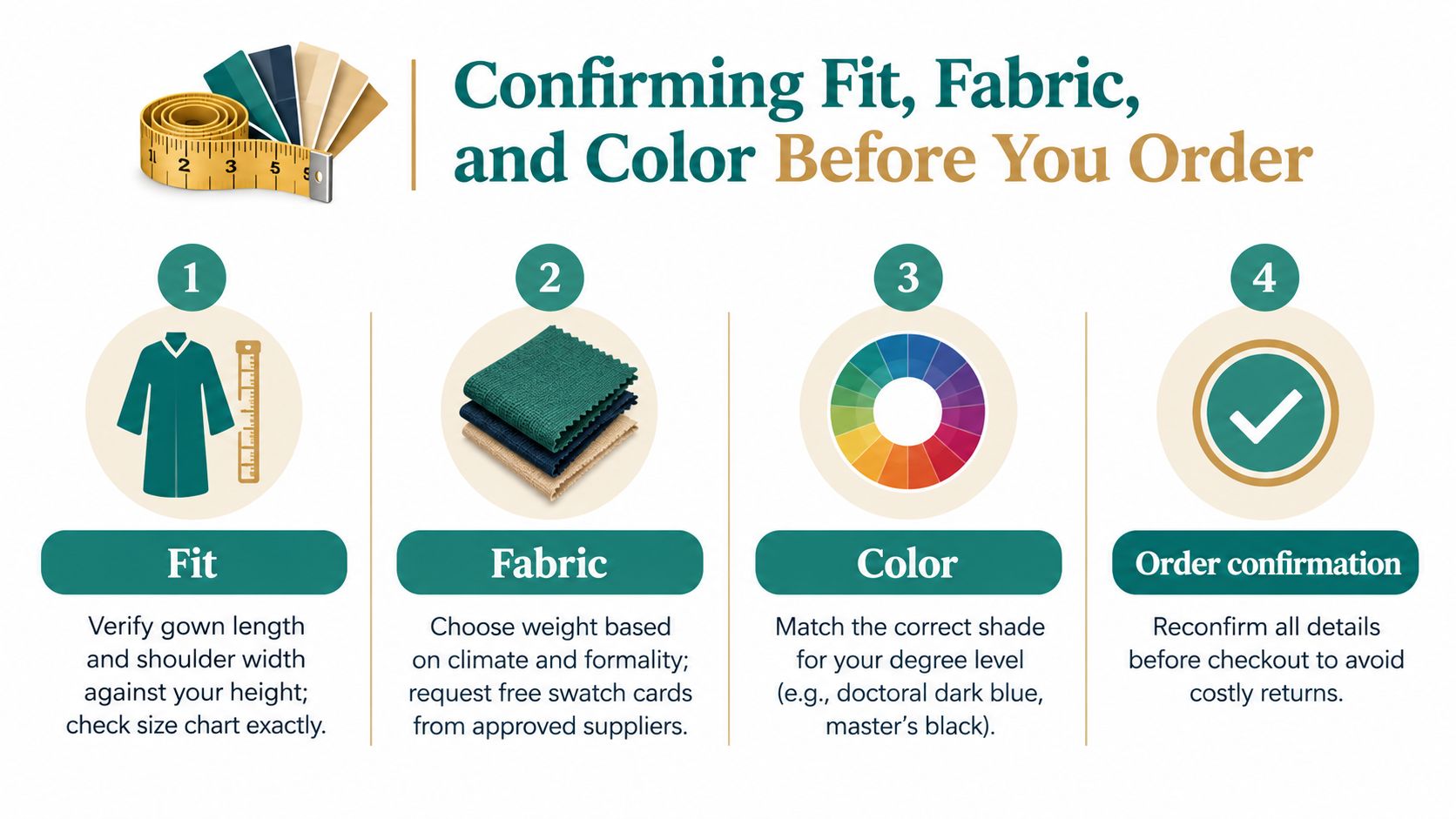
A practical pre-check
Before submitting payment, record these details:
- Degree level: Confirm bachelor's, master's, PhD, or ScD status.
- Measurements: Check height, chest, sleeve position, and cap or tam size separately.
- Material: Verify gown fabric, velvet, faille, piping, and lining.
- Color: Match the degree-specific trim and discipline details.
- Conformity: Ask how the vendor documents compliance with MIT's specifications.
- Returns: Read the exchange terms before ordering a custom or personalized item.
For a practical reference on measurements and materials, use the size, color, and fabric guide. Don't wait until the package arrives to discover that cap sizing was never included in the gown selection or that a doctoral hood has the wrong trim.
Ordering Timelines and Expedited Shipping Options
The safest timeline begins with commencement day and moves backward. Standard stock may be easier to replace than a custom doctoral gown, but neither should be treated as a last-minute purchase. A delayed shipment leaves little time for size corrections, color review, or conformity approval.
Work backward from the ceremony
Use this sequence as a planning framework:
- Several months ahead: Confirm your degree level, discipline, measurements, vendor, and required MIT details. This is the calmest point to place a standard order.
- A few months ahead: Place the order and review the confirmation carefully. Check the spelling of your name, degree, hood details, gown size, cap or tam size, and delivery address.
- About a month ahead: Treat this as the point at which an unresolved order becomes a logistics problem. Contact the supplier if tracking, customization, or approval information is missing.
- Two weeks ahead: Expedited shipping may still be available, but it can add cost and reduce your options if a replacement is needed.
- One week ahead: Confirm delivery status, inspect the set immediately, and contact the supplier about any discrepancy. Ceremony-day delivery should be treated as an emergency path, not the normal plan.
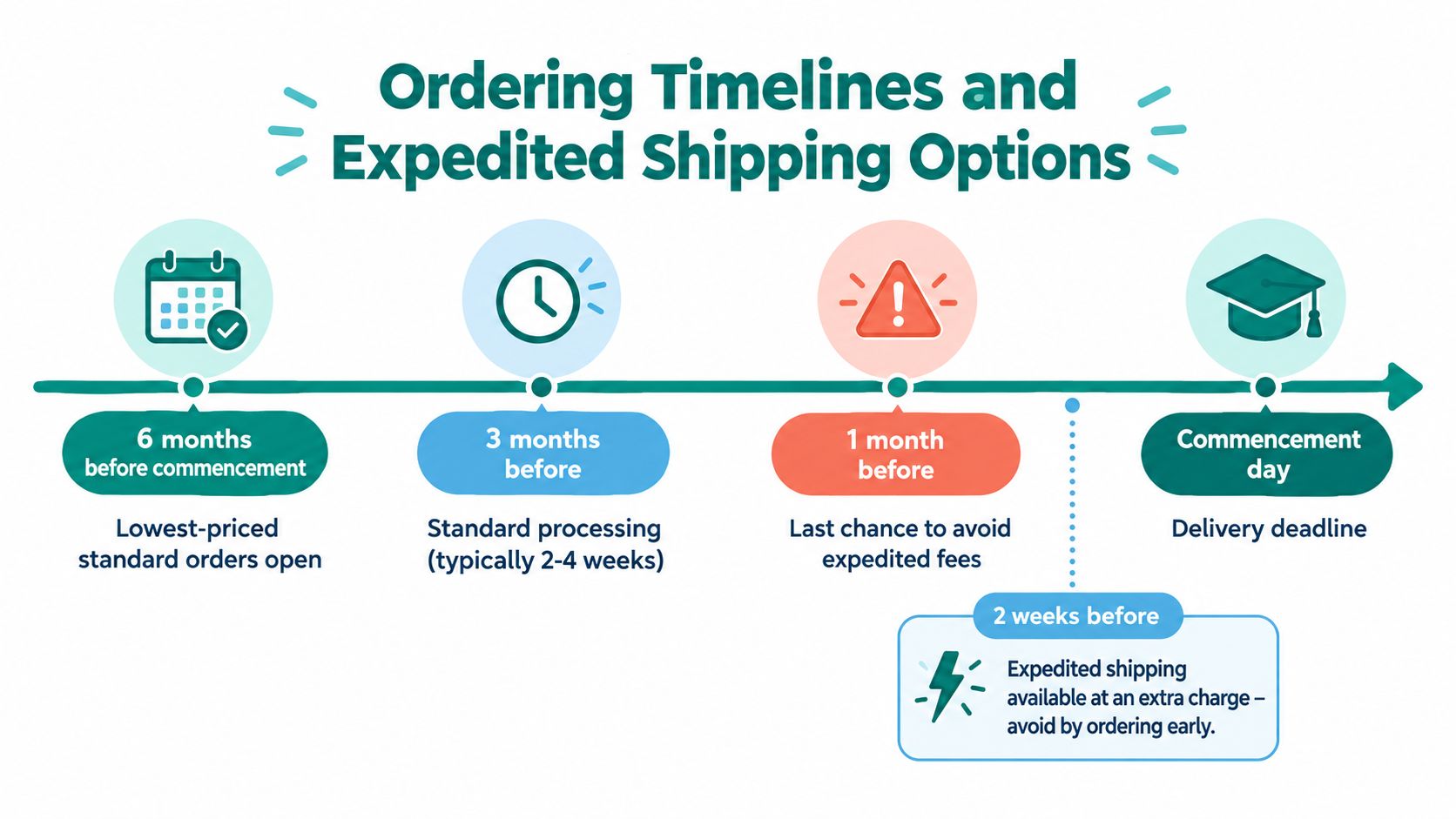
Shipping and pickup decisions
Domestic and international orders need different buffers. International doctoral candidates should allow time for customs processing in addition to the supplier's handling and transit time. A tracking number doesn't eliminate the possibility of a customs delay.
Cambridge-area graduates may also have an in-person fitting or pickup pathway when the designated vendor operates on campus. Confirm the current campus dates, appointment requirements, and any deposit or holding terms directly with the vendor or commencement office, because those arrangements can change by ceremony year.
If you're ordering for a guest who only needs regalia for the day, a rental may be more practical than a permanent purchase. The same conformity question still applies. A rental set should match the required degree level and institutional details before the wearer arrives at robing.
Coordinating Group Orders for Departments and Cohorts
A group order works best when one person owns the details from collection through distribution. That coordinator might be a department administrator, lab manager, program assistant, or designated graduate representative. The role isn't merely to place a larger order. It's to prevent individual decisions from drifting away from the official MIT specification.
Build one verified roster
Gather the information each graduate needs before requesting a quote or submitting an order:
- Identity: Full name and reliable contact information.
- Degree: Bachelor's, master's, PhD, or ScD, with the academic discipline.
- Measurements: Height, chest or body measurement, and cap or tam size.
- Regalia details: Gown style, hood requirements, and any approved customization.
- Delivery: A shared campus address and a named recipient.
A single roster helps catch errors that are difficult to spot in separate purchases. One graduate may select a master's gown after moving into a doctoral program, while another may choose a hood with an attractive color that doesn't match the discipline. The coordinator can compare every order against the official program list before payment.
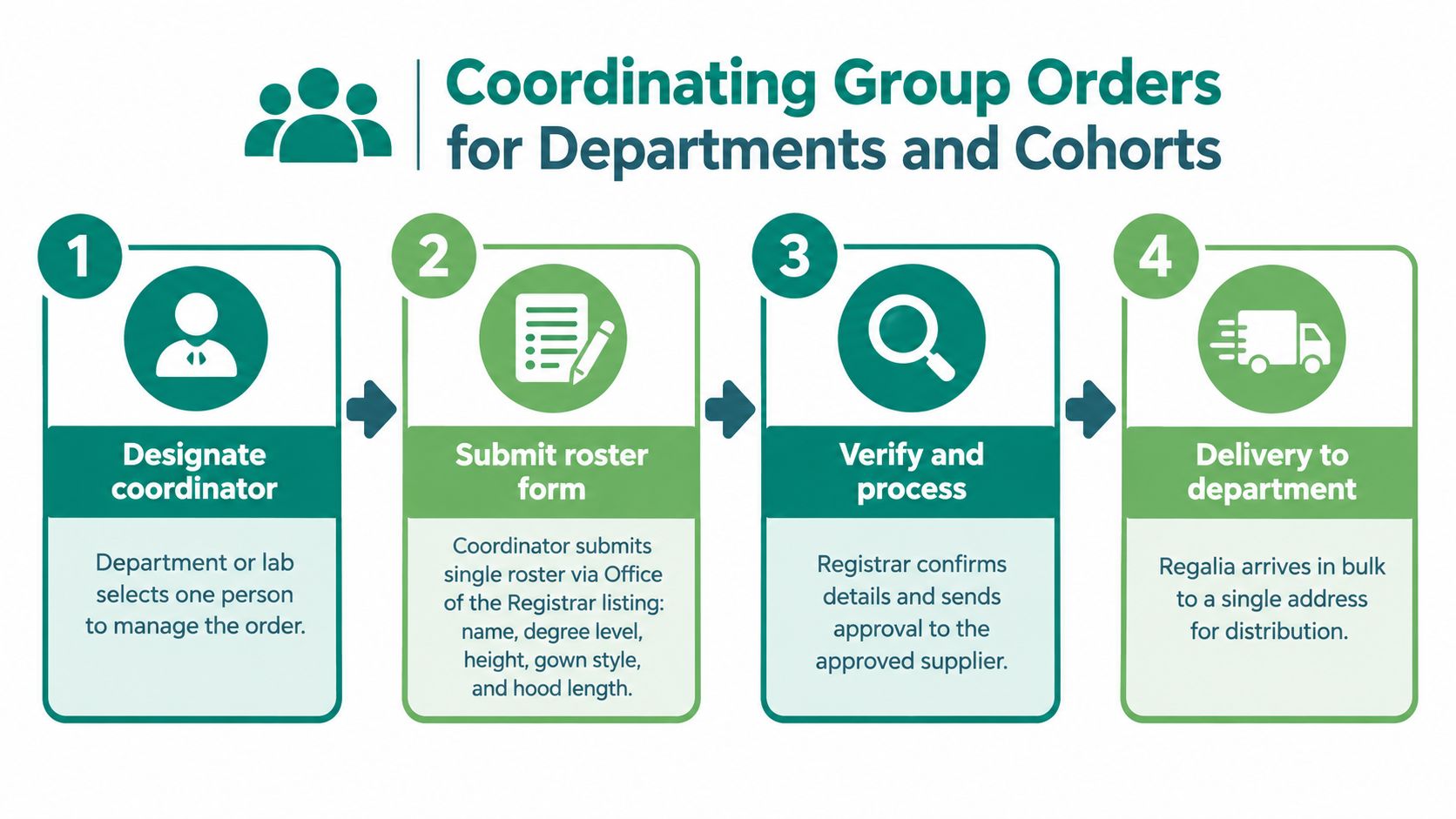
Centralize delivery, separate distribution
Sending the order to one campus address reduces the chance that several personal shipments arrive on different schedules. The coordinator can schedule a fitting and pickup window, inspect the packages, and identify missing or incorrect pieces before ceremony morning.
Payment can remain consolidated while sub-shipments are arranged for off-campus affiliates or split-site cohorts. Ask the supplier how it handles separate addresses, replacement items, and changes after the roster is approved. A good group workflow preserves individual size and degree data while keeping the shipping and communication channels centralized.
Coordinator's checkpoint: Don't submit the roster until every graduate has confirmed the degree level, discipline, measurements, and headwear size.
Common Ordering Mistakes and Your Final Checklist
Most mistakes happen before the order is submitted. Graduates wait too long for a custom doctoral set, assume any black doctoral gown will work, choose a hood by appearance rather than discipline, or skip fabric confirmation because the online photograph looks close enough.
Fit creates a second group of problems. A gown selected from weight alone may sit incorrectly at the shoulders or sleeves, and cap or tam sizing may be separate from gown sizing. A complete order review should examine the person, the product, and the ceremony logistics together.
Pre-order verification
- Degree level: Confirm whether the order is for bachelor's, master's, PhD, or ScD regalia.
- Institutional style: Compare the gown, hood, cap or tam, velvet, lining, and trim with MIT's published guidance.
- Color details: Verify cardinal red, silver-gray, and the degree-specific doctoral trim.
- Vendor conformity: Ask how a borrowed or vendor-supplied set will be checked against MIT's requirements.
- Fabric evidence: Request a swatch when color or material isn't clear from the product page.
Order and delivery decisions
- Individual or group: Choose a group order when a department can collect complete information and distribute the sets.
- Standard or expedited: Select standard processing when the calendar permits. Use expedited service only when the delivery risk justifies the added cost.
- Replacement plan: Know the supplier's exchange procedure before the package arrives, especially for custom or institution-specific pieces.
- Inspection: Open the shipment promptly and compare every component with the confirmation.
Ceremony-day preparation
- Steaming: Remove packaging wrinkles according to the garment instructions. Don't apply direct heat to velvet.
- Hood hookup: Practice securing the hood so it doesn't slide backward during robing.
- Headwear: Confirm whether your degree requires a mortarboard or doctoral tam.
- Documents: Bring any required name card, conformity approval, or pickup confirmation.
- Arrival: Allow time for staff to correct placement or identify a missing piece before the procession.
MIT's sustainability work also points to a broader procurement question. MIT launched an Infinite Gowns pilot for 2026 graduation to collect regalia after Commencement and make it available to future students through a campus reuse program (MIT Infinite Gowns pilot). Reuse can reduce one-time purchasing, but coordinators still need reliable systems for cleaning, storage, inventory, color accuracy, and degree-specific availability.
Start with the checklist today. Confirm your degree and discipline, save MIT's specifications, measure carefully, request material information, and choose the ordering pathway before the ceremony calendar becomes urgent.
Grad Store offers MIT-specific bachelor's, master's, and doctoral regalia options, along with fabric swatches, sizing resources, group-order coordination, and expedited shipping support. Review the available Grad Store options early, then compare the gown, hood, trim, and headwear details with MIT's published requirements before placing your order.